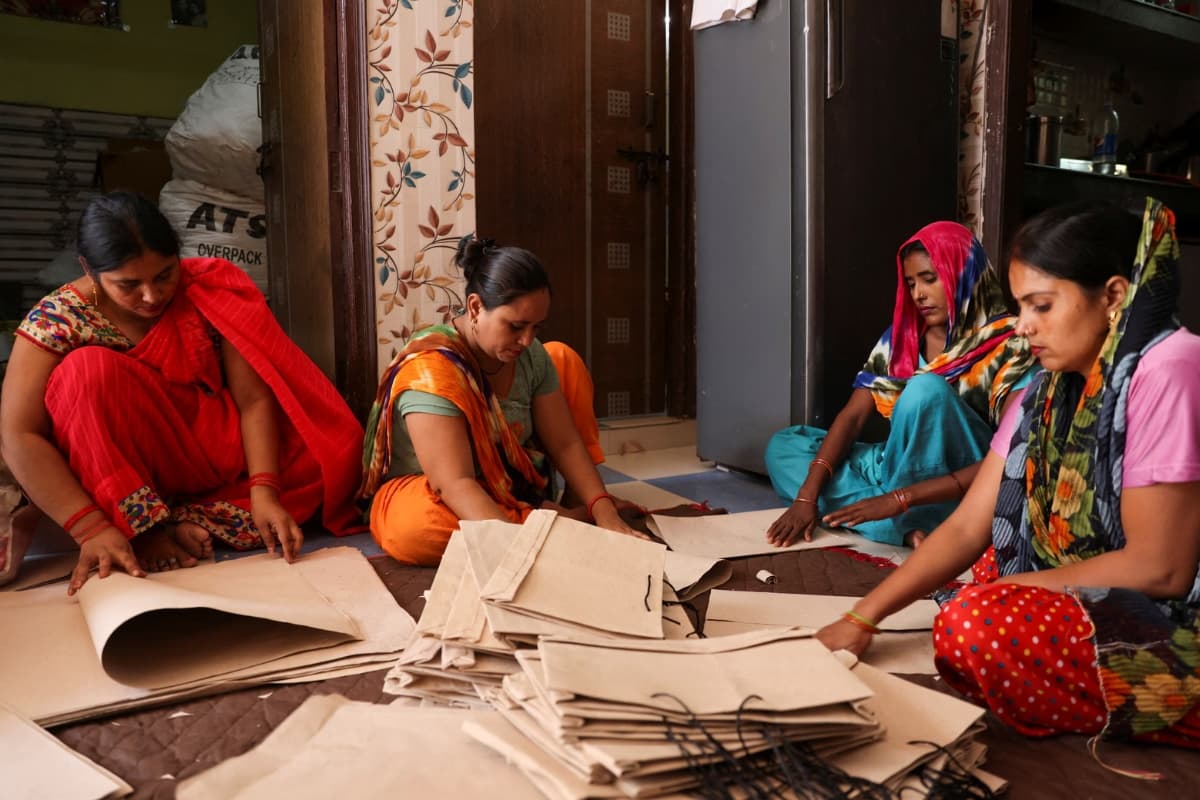
Understanding the Shift from Job Dependency to Entrepreneurship
India is undergoing a structural transformation in its employment landscape. For decades, the majority of the workforce relied on traditional salaried jobs as the primary source of income. However, with rapid population growth, limited formal job creation, and increasing competition, the gap between job demand and job availability has widened significantly.
This imbalance has led to what can be described as a job crisis. Each year, millions of graduates enter the workforce, but the number of stable, high-quality jobs does not grow at the same pace. As a result, job security is declining, and dependence on employment alone is becoming increasingly unsustainable.
In contrast, entrepreneurship and self-employment are emerging as practical and scalable solutions. Instead of waiting for opportunities, individuals are now creating their own sources of income. This shift is not just a trend but a necessity driven by economic realities.
The Rise of Startups and MSMEs in India
The growth of startups and MSMEs (Micro, Small and Medium Enterprises) has played a critical role in reshaping India’s economic structure. These businesses are no longer seen as small alternatives but as major contributors to national development.
MSMEs contribute around 30 percent to India’s GDP and generate significant employment across both urban and rural regions. They support local manufacturing, enable innovation, and create decentralized economic growth.
At the same time, India’s startup ecosystem has expanded rapidly, with thousands of new ventures emerging across sectors such as technology, retail, services, and manufacturing. This rise reflects a broader acceptance of entrepreneurship as a viable and respected career path.
The combined impact of startups and MSMEs clearly indicates that economic growth in India is increasingly driven by self-employed individuals and business owners rather than traditional employment structures.
Government Push for Self-Employment and Entrepreneurship
Recognizing the importance of self-employment, the Indian government has introduced multiple initiatives to support entrepreneurs and small businesses. These initiatives focus on improving access to funding, simplifying business processes, and encouraging innovation.
Programs such as Startup India, Mudra Yojana, and various subsidy schemes aim to reduce financial barriers and promote business creation. Financial institutions, NBFCs, and government-backed schemes are actively providing loans, credit support, and incentives to individuals willing to start their own ventures.
Despite these efforts, awareness and accessibility remain major challenges. Many aspiring entrepreneurs are either unaware of these schemes or unsure about how to utilize them effectively. This gap between policy and execution continues to limit the full potential of self-employment in India.
Challenges Faced by Aspiring Entrepreneurs
While self-employment offers significant opportunities, it also comes with practical challenges that prevent many individuals from taking the first step.
One of the biggest issues is the lack of clarity. Many people want to start a business but do not know which idea to pursue or how to validate it. Without proper guidance, decision-making becomes difficult and risky.
Access to funding is another major barrier. Even though financial options exist, navigating loan processes, eligibility criteria, and documentation can be complex for first-time entrepreneurs.
Skill gaps also play a crucial role. Running a business requires knowledge of marketing, operations, finance, and digital tools. Most individuals do not have access to structured, practical learning in these areas.
Additionally, limited networking opportunities restrict growth. Building a successful business often depends on the right connections, partnerships, and mentorship, which are not easily accessible to everyone.
How Swarozgar Fest Bridges the Gap
Swarozgar Fest addresses these challenges by creating a focused platform for self-employment and business growth. It brings together entrepreneurs, startups, investors, financial institutions, and industry experts under one roof.
The event provides direct exposure to real business opportunities through exhibitions, franchise models, and live business interactions. This helps participants move beyond theoretical ideas and explore practical options.
It also simplifies access to funding by connecting attendees with banks, NBFCs, and loan consultants who provide guidance on financing and government schemes. This reduces confusion and accelerates decision-making.
Workshops and training sessions at the event focus on real-world skills such as business planning, marketing strategies, and digital growth. This ensures that participants gain actionable knowledge rather than just conceptual understanding.
Most importantly, Swarozgar Fest enables strong networking. Attendees can interact with experienced entrepreneurs, potential partners, and mentors, creating opportunities for collaboration and long-term growth.
By combining opportunity, knowledge, and access in one place, Swarozgar Fest helps individuals overcome the common barriers associated with starting and scaling a business.
Conclusion
Self-employment is no longer an alternative career path in India. It is becoming the foundation of economic growth and employment generation. With the rise of startups, the strength of MSMEs, and increasing government support, entrepreneurship is shaping the future of the country.
However, the transition to self-employment requires the right guidance, resources, and environment. Without these, many potential entrepreneurs remain stuck at the idea stage.
Platforms like Swarozgar Fest play a critical role in bridging this gap by providing a structured ecosystem where individuals can learn, connect, and take action.